
Description
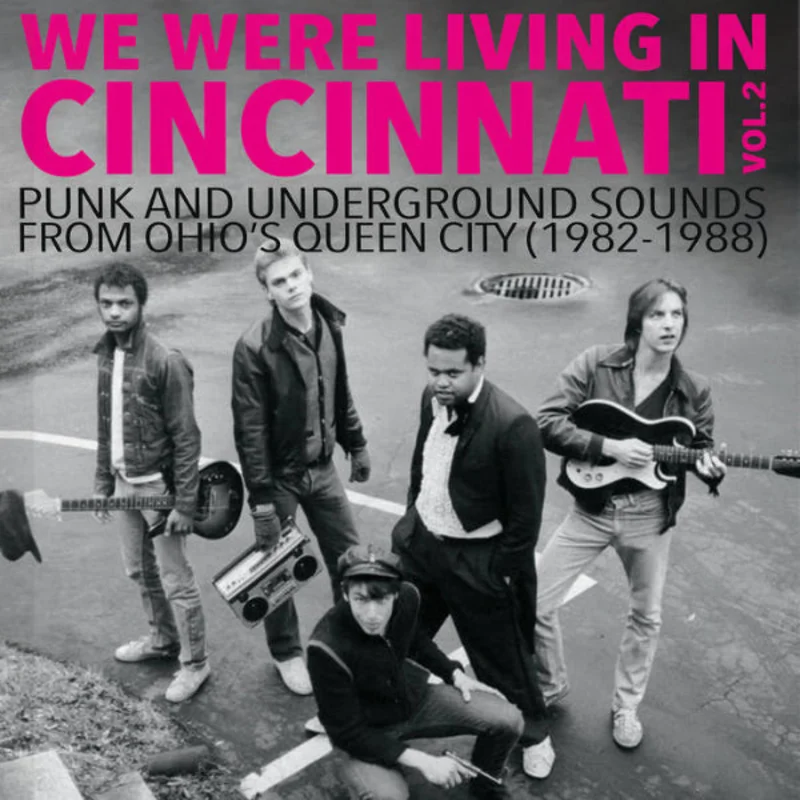
WE WERE LIVING IN CINCINNATI Vol. 2 covers a vast swath of biodiverse underground noise from all corners of the brain. Compiled by Peter Aaron as with the first volume in 2019, its an unearthed deep look into Queen City punk under the microscope and filled with interesting chunks of that magical Midwest oddness.
Its finally here, Peter Aarons anxiously-awaited second volume of Queen City punk underground history, and with an incredible array of wild noise from the farthest reaches of punk & new wave nomenclature. Veering deep into sub-obscure 7 and demo tracks of postpunk, power pop, hardcore, DIY noise, and spiky new wave, WWLICV2 is a testament to such a fertile scene in such a fertile state, the true Mesopotamia of punk, really.
This comp aims to capture the (second wave) Jockey Club era, up to right before grunge entered the bloodstream of
America, when loose boundaries of styles enmeshed into new genres, and a freedom of direction meant
punk had a mutation schedule to keep up with. Cincinnati may not have been huge but easy access to
self-releasing 7 singes and cheap recording setups kept the city humming in productivity, as this pummeling secondhelping with a whopping TWENTY EIGHT bonus download tracks can attest.
As the 1980s took hold in Cincinnati, its punk/new wave scene remained tiny but tight. At the dawn of the decade, the scenes members couldnt have totaled north of 150. And the number of active, relevant local bands couldve been counted on two chili-smeared hands (Cincinnati-style chili is an indigenous delicacy, in case you werent aware). But what Queen City punk lacked in quantity was, fortunately for us lucky-and-few participants, offset by the quality and pure passion of its acts something that this compilation, the second installment of the We Were Living in Cincinnati series, makes clear. Loudly. The first volume, released on HoZac/Shake It! in 2019, covered the scene from its protopunk stirrings circa 1975 up to the artistically transitional year of 1982. This chapter overlaps with the earlier one a bit, picking the ball back up again in 82 and carrying it forward to the late 1980s.
As were other towns at the time, Cincinnati during this period was refining its underground flavors: postpunk, power pop, hardcore, garage revival, no wave, electronic, noise, neo-psychedelia, even a few full-circle nods back to the classic 1977 punk sound it was all swirling together in the same steaming pot. But a shortage of steady local venues was problematic. The citys large flagship club, Bogarts, was closed for renovations from 1980 to 1982, and most other nighteries had fallen off. Things were centered around the stage-less side room of the Brew House in Walnut Hills, while occasionally there might be a WAIF benefit at the neighboring, listener-supported stations studio in the decrepit Hotel Alms. Or maybe something downtown at C.A.G.E. (Cincinnati Artists Group Effort) gallery or, rarely, at the University of Cincinnatis college of Design, Architecture, Art, and Planning (DAAP) in Clifton. But that was it, really. The fall 1982 advent of the Jockey Club, just across the Ohio River in Newport, Kentucky, however, changed everything.
The Reduceds front man, Bill Billy Blank Leist, and a coterie that included his fellow WAIF DJ Handsome Clem Carpenter, had been attracted to the crumbling casino by a handful of adventurous one-off gigs there featuring Cointelpro, 11,000 Switches, BPA, and Alterior Motives. Leist talked its owner, ex-gangster Shorty Mincey, into letting him handle the booking, and the Jockey Club soon became one of the American undergrounds leading venues. Pretty much all the bands heard on this compilation played its stage, as openers for touring acts and/or on all-local bills.
The arrival of the Jockey Club was concurrent with the rise of hardcore, and its being part of the national D.I.Y. network was instrumental not only to the genres spread across the U.S., but to a reinvigoration of the local scene with youthful, newfound energy. The rising tide of the J.C. lifted many local boats, and the whole scene flourished, with gigs also happening back north of the river at joints like J.R.s, Hot Shotz (formerly Shipleys), the Plaza, Ripleys, and C.J.s Downunder. The death knell of the Jockey Club came when Bogarts started presenting all ages shows, which meant that much of its student-heavy audience no longer had to travel to sketchy Newport for their rock action, and Shorty eventually sold the building.
By that time, I had partnered with Leist in booking shows, building on what hed done by funneling in the newer touring bands whod been contacting via my fanzine, Suburban Muckraker, and my WAIF and WVXU radio shows. We moved on to the Top Hat, Murphys Pub, and, finally, Shortys Underground (named for the great man). Throughout, the scene remained defiantly vibrant, with new bands frequently forming to take the places of those whod broken up. One of the area outfits that arose during this time was the Afghan Whigs, whose ascension would tilt the outside ears and eyes of A&R and music-media toward town, blowing the lid off the Cincinnati scene for all the world to see. Looking at things retroactively, with the rise of the Whigs, it feels like it becomes the next era, which is why Ive chosen to make the period covered here parallel with the Jockey Clubs run as a punk venue: 1982-1988.
One afternoon during those heady years, I was hanging out with Tim Schwallie of BPA and the Wolverton Brothers at scene hub the Highland Coffeehouse. We were both fans of the Pebbles and Nuggets compilations of 1960s garage rock, and I wondered aloud if someday there might be compilation albums of the underground bands of our era.
Of course, Tim said, emphatically. Thats what were doing this for.
Indeed. Here we are.
Peter Aaron, 2022
RIYL: Bloodstains Across the Midwest, Killed By Ohio, Red Snerts, Cleveland Confidential
‘We Were Living In Cincinnati Vol 2 1982-88’ Archival compilation LP by HoZac Records
Reviews
There are no reviews yet.